Commercial Waste in Tunbridge Wells
Commercial waste in Tunbridge Wells needs a practical, reliable approach that suits everyday business activity as well as larger clear-outs. We provide commercial waste removal for offices, shops, workshops, hospitality venues and other premises that need tidy, organised disposal of non-hazardous waste. The focus is on removing unwanted materials efficiently, keeping disruption under control and helping each collection match the type and volume of waste involved.
Our service covers routine business waste removal alongside one-off clearances when storage areas, back rooms or workspaces need attention. That can include mixed general waste, recyclable materials, packaging and bulky items that are no longer useful. Where the waste stream is more specific, the right route matters: business waste removal is best considered as an organised service for commercial premises that want scheduled or ad hoc collections handled with care and consistency.
For many customers, the main aim is simple: keep premises usable and waste moving out of the way without creating extra work for staff. If you are comparing options, it helps to think about the type of waste, access to the premises, any sorting needed and the regularity of the collection. When you are ready to talk through the details, request a quotation and outline what needs to be removed.
Everyday commercial collections
Business waste is rarely just one material type. Office bins, stockroom packaging, mixed recyclables and general rubbish often build up together, and a well-planned collection has to recognise how those streams sit alongside one another. We handle commercial waste removal in a way that supports day-to-day operations, so the process is straightforward whether the work is part of a regular routine or a one-off clear-out. Clear sorting at source is useful, but we can also work with mixed loads where items need separating as part of the collection.
For premises that need a repeat collection pattern, it is worth thinking about the items that appear most often and how they are stored before removal day. Access, quantity and material type are the main practical points. A collection that is planned around these factors usually keeps handling simpler and helps avoid wasted time at the property. If you want to talk over an ongoing arrangement, book online when you are ready to start the conversation.
What can be included
The precise mix depends on the premises, but commercial collections commonly involve office paper, cardboard, shrink wrap, unwanted stock packaging, broken furniture and general non-hazardous refuse from work areas. Some customers need help after a tidy-up or internal move, while others need support because bins are overflowing or storage rooms have become difficult to manage. A sensible collection plan keeps those items moving without making the workplace untidy for longer than necessary. If you need broader disposal support, waste removal provides a general route for a wider range of unwanted materials.
Offices, shops and customer-facing premises
Office and retail environments often generate waste in layers rather than in one single pile. Paperwork, packaging, display materials, worn-out furniture and general refuse can all accumulate at different rates. The service needs to be practical enough to suit working hours, storage limits and the nature of the items being removed. For many premises, the priority is to maintain a professional space while ensuring waste does not interfere with staff movement or customer access.
When collections are organised carefully, they can help support a tidy back office, a clear stockroom and a more manageable waste routine overall. It is usually best to identify whether the items are mainly paper-based, mixed, bulky or simply general waste, because that shapes how the removal is planned. For office interiors in particular, office clearance is a useful related option when the need goes beyond bins and into furniture, equipment and room contents.
Retailers and other customer-facing premises may also need occasional support after refits, seasonal changes or stockroom reorganising. In those cases, the collection is less about a single bin and more about clearing a defined set of items quickly and methodically. A direct approach tends to work best: separate what is to stay, identify what is to go and consider whether any items can be handled more efficiently as part of a larger clearance rather than as repeated small jobs. That keeps the process focused and easier to manage.
Bulky items and mixed interior clearances
Not every commercial waste job is limited to bagged refuse or small container loads. Businesses also end up with bulky items such as desks, shelving, chairs, counters and assorted fixtures that are no longer needed. These removals call for a different approach because handling, loading and sorting matter more than simple bin emptying. Where items are too large for ordinary disposal, a clearance service can gather them into one organised removal rather than leaving staff to break the work into smaller tasks.
Mixed loads are common in this kind of work, especially when an area is being reconfigured or emptied for refurbishment. One collection might involve both loose waste and larger furniture pieces, so it helps to treat the job as a single planned exercise instead of trying to separate every object in advance. If the main issue is old seating, cabinets or display units, furniture disposal is a useful related page for understanding how those items fit into the wider service.
- Items may include desks, shelving and office chairs.
- Stockroom fittings and counters can often be removed with other waste.
- Mixed clearances may suit premises undergoing a reset or partial emptying.
Handling larger removals and special item types
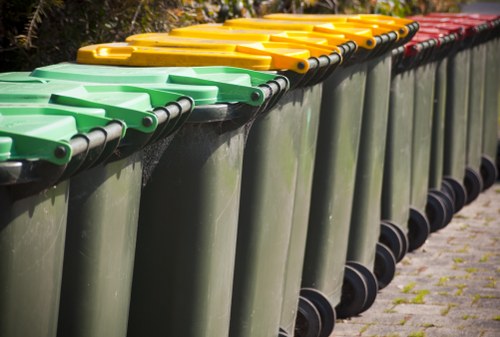
Some commercial waste requires more careful handling because of its size, weight or material composition. Appliances, old display items, damaged fixtures and other awkward objects may need to be grouped separately from ordinary refuse so the collection remains orderly. The aim is not just to clear space, but to make sure each item is dealt with in the right way according to what it is and how it needs to be loaded or sorted.
Where business premises include break rooms, kitchens or storage areas, there can be a need for appliance removal alongside general waste. That is particularly relevant when a fridge, freezer or similar item has reached the end of its use. In those situations, fridge and appliance removal is a sensible supporting service because it focuses attention on items that should not simply be left with ordinary rubbish.
For broader clear-outs, the practical question is often whether items should be collected on their own or as part of a larger internal clearance. The answer depends on how much is being removed, whether the items are easy to access and whether the load includes both furniture and general waste. A planned collection is usually the most efficient option because it allows everything to be grouped by type before removal starts, rather than being assessed piecemeal at the point of loading.
Clear-outs for storage rooms, garages and back areas
Back rooms, store cupboards, yard spaces and garages can become catch-all areas for materials that no longer have an immediate place elsewhere. In commercial settings, that often means old equipment, spare packaging, damaged stock and general waste all building up in the same space. Our waste removal work can include these areas when they need to be cleared methodically and returned to a more workable condition. The emphasis is on removing what has accumulated without turning the task into a disorganised sweep.
Where a space contains household-like contents as well as business material, it may be better to think in terms of a broader clearance rather than a narrow bin collection. garage clearance is relevant where outbuildings or storage areas have become overloaded, while loft clearance is more suited to overhead storage spaces that hold archived or unused items. Each type of area has its own access issues and loading considerations.
Choosing the right scope
It is usually helpful to decide whether the task is a pure waste collection or a wider emptying job. If the area contains only loose rubbish, commercial waste removal may be enough. If it contains shelving, stored items, mixed contents or heavier pieces, a more complete clearance may be the better option. The scope shapes how the work is organised and helps avoid underestimating the time or access needed for the job.
Price factors and quotation details
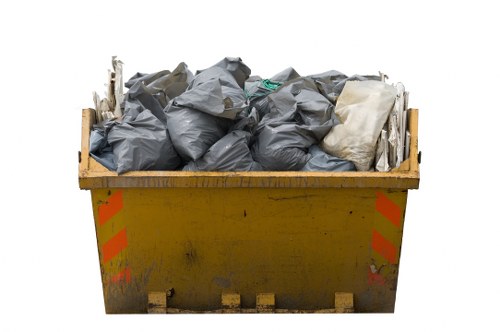
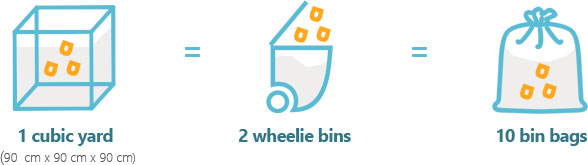
Commercial waste pricing normally depends on a small number of practical factors rather than on broad assumptions. The amount of waste, the type of materials, loading access and whether the job includes bulky or awkward items all influence the final quotation. This is why two apparently similar clearances can still differ. A focused estimate is more useful than a guess, because it reflects the actual work involved and avoids surprises later on.
If you are arranging waste removal for a business, it helps to list the main categories of waste, the approximate quantity and any access details that might affect loading. That might include stairs, narrow corridors, shared entrances, restricted parking or the need to work around opening hours. These details allow the job to be scoped properly. When the outline is ready, pricing and quotes gives a useful place to discuss the work before anything is booked.
In commercial settings, quotation discussions are often easiest when they stay specific. Rather than describing the job in very broad terms, it is better to say what needs removing, where it is located and whether the collection includes mixed waste, furniture or special items. That gives a clearer picture of the job and makes it simpler to match the right service to the actual requirement.
Sorting, reuse and responsible disposal
Waste removal is not only about taking things away. The way items are separated can affect how useful they remain as materials and how they are managed after collection. Cardboard, paper, metals, furniture and general refuse all behave differently once they leave the property, so good sorting practice at the start can support a more orderly disposal process. For businesses that want to keep disposal organised, the key is to identify what can be separated easily and what should be treated as a mixed load.
Recycling and sustainability is a relevant page for customers who want to understand how collected materials may be handled in a broader environmental context. The practical point at the service level is simple: the more clearly the waste is identified before collection, the easier it is to direct it into the appropriate stream. That does not mean every job needs a complicated set of instructions, only that a little sorting can make a noticeable difference to how smooth the removal is.
Where a business generates a steady mix of recyclable and non-recyclable waste, it may be sensible to review how items are grouped before they leave the premises. This is especially useful in offices, retail back rooms and storage areas where different materials build up at different rates. Responsible disposal starts with sensible segregation, followed by a collection that keeps the remaining work straightforward.
Special cases and item-specific disposal
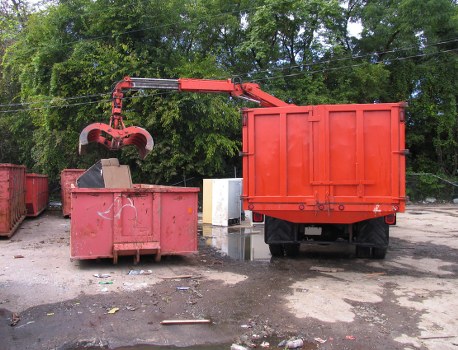
Some commercial items need a more specific disposal route than standard mixed waste. Broken sofas, mattresses, confidential paper waste, appliances and certain special materials can each sit outside an ordinary general rubbish load. That is why it helps to decide early whether the work is a general clear-out or a more item-focused disposal task. In many cases, a business will need one main collection with a few clearly separated items that deserve extra attention.
For example, if a premises is dealing with upholstered seating or mattresses, mattress and sofa disposal is a useful related service page. If paper records are involved, confidential shredding may be relevant where secure handling of sensitive documents matters. These are not substitutes for the main waste service; they are examples of how particular items can be handled when they appear alongside general commercial waste.
Special cases are easier to manage when they are identified at the outset. That includes noting whether the item is broken, oversized, contaminated or simply no longer needed. A careful description helps the collection stay organised and keeps the process focused on the right disposal route. If you have a mixture of everyday waste and item-specific materials, a combined assessment is usually the cleanest way to arrange it.
About Tunbridge Wells
Tunbridge Wells, formally Royal Tunbridge Wells, is a town in western Kent known for its association with the discovery of the Chalybeate Spring in the early seventeenth century and the later development of the Pantiles as a spa promenade. The settlement grew from a small visiting resort into a substantial market and commuter town, while still retaining traces of its older spa character. The Pantiles remain one of its best-known historic spaces, with a long colonnaded walk and a streetscape that reflects the town’s leisure and retail past. Beyond that centre, the town extends across a varied landscape of residential streets, civic buildings and commercial areas that grew in different periods. Calverley Grounds provides a prominent park space close to the centre, while Dunorlan Park offers larger landscaped open ground to the west. To the north and east, the town connects with areas shaped by rail, road and modern development, yet the historic core still gives Tunbridge Wells a distinct identity within Kent. The wider borough includes countryside, villages and wooded valleys, and the town sits within an area of ridges and greenspaces that have long influenced settlement and movement. Its architecture ranges from Georgian and Victorian elements to later commercial and residential buildings, and the town centre combines heritage frontage with contemporary services, shops and workplaces. Tunbridge Wells also has a cultural life shaped by theatres, independent businesses, schools and local events, making it a place with both historic depth and modern function.
Planning a commercial collection
When a business arranges waste removal, the smoothest jobs are usually the ones where the basic facts are known in advance. That does not mean producing a perfect inventory, but it does help to know what is being removed, which floor or room it is in and whether any item needs special handling. Clear access and a sensible grouping of the waste can make a practical difference, especially where items are spread across more than one area. For larger jobs, a brief description is often enough to start the process.
It can also be useful to decide whether the work should happen as one concentrated visit or in stages. Some premises prefer to clear a back room first, then deal with furniture or remaining waste afterwards. Others want the whole task completed together. Both approaches can work; the right one depends on how the space is used and how much material is being removed. If you are preparing a request, keep the main details together and use the contact us page for the final step when you are ready to ask for a quote.
The important thing is to keep the enquiry practical rather than overcomplicated. A sensible outline of items, access and scope usually gives enough information for a quotation discussion to begin. From there, the service can be matched to the actual load instead of being guessed from a brief label. That keeps the process clearer for everyone involved and helps the collection fit the business rather than interrupt it.