Commercial Waste Tunbridge Wells: Health & Safety Policy
 This Health and Safety policy sets out the commitment of our commercial waste and rubbish removal operation in Tunbridge Wells to protect the health, safety and welfare of employees, contractors, visitors and the public while providing business waste services. The purpose is to establish clear responsibilities, safe systems of work and documented procedures so that commercial rubbish collection and disposal activities are carried out safely and in compliance with applicable standards.
We recognise that safe commercial waste management in our service area depends on competent people, appropriate equipment and effective controls. All staff, from office teams arranging collections to depot operatives and drivers carrying out waste removal, must observe this policy. Managers will provide leadership and resources, while every employee has a duty to follow safe working practices and to report hazards.
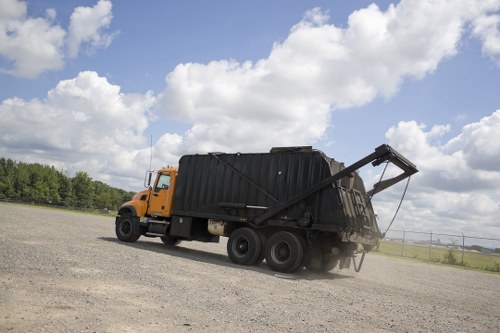 For the purposes of this policy, "commercial waste" and "business waste" cover materials generated by offices, retail, hospitality and light industrial clients. The policy applies to all onsite collections, transfer, sorting and loading activities, and the operation of vehicles used for rubbish collection Tunbridge Wells and nearby service calls. Definitions, abbreviations and references are recorded in supporting documents.
Policy Statement and Objectives
Our objective is to prevent injury and ill-health and to minimise environmental impact through safe waste handling and service delivery. We will: maintain safe vehicle and container use; ensure proper segregation of materials; provide appropriate personal protective equipment (PPE); and monitor compliance. The company will not compromise safety for speed of collection or cost savings.
Responsibilities include risk assessment, method statements and tool-box talks before non-routine tasks. Supervisors will ensure every operative receives induction training and periodic refreshers covering lifting techniques, manual handling, sharps awareness and hazardous material identification. Records of training and qualifications will be maintained centrally.
 Contract managers will review contracts to ensure service specifications align with safe operational practices for commercial waste Tunbridge Wells clients. Where third-party contractors are engaged for specialist disposal, they must demonstrate equivalent health and safety standards and provide evidence of insurance and certifications.
Risk Assessment, Controls and Safe Systems
All activities will be subject to documented risk assessments and control measures. Controls will follow a hierarchy: eliminate hazards where possible, substitute with safer alternatives, isolate risks, apply engineering controls, and finally use administrative controls and PPE. Safe systems of work will be developed for high-risk tasks such as heavy lifting, working at height on vehicles, and handling hazardous wastes.
Key control measures include:
- Pre-shift vehicle inspections and maintenance schedules to ensure roadworthiness and containment integrity.
- Use of mechanical aids and team lifts to reduce manual handling risks.
- Segregation of recyclable and non-recyclable materials to reduce contamination hazards.
- Provision and mandatory use of PPE: gloves, hi-vis, steel-toe footwear and eye protection where needed.
- Sharps containment and clear procedures for unknown or hazardous substances.
Operatives will carry handheld devices or checklists to ensure each collection fulfils safety checks; deviations will be reported immediately to supervisors.
Vehicles and plant used for commercial rubbish collection must be operated only by trained, authorised personnel. Daily checks, load restraint and safe loading procedures reduce the likelihood of spillage or accidents. Depot layout and traffic management will be designed to separate pedestrian and vehicle movements, and to provide safe pedestrian access to work areas.
Incident reporting and investigation procedures are established to capture near misses, injuries and environmental incidents. Where incidents occur, immediate first aid and emergency response actions are required, followed by an investigation to identify root causes and preventive measures. Any serious incident will be escalated and reviewed to prevent recurrence.
 Environmental controls supporting the health and safety policy include spill kits, secondary containment for liquid wastes and procedures for the safe transfer of contaminated materials. Our rubbish company service area operations promote waste segregation at source to reduce cross-contamination and to protect operatives and the public.
 Monitoring and continual improvement form an integral part of the policy. Regular audits, performance metrics and corrective action plans will be used to measure safety performance for commercial waste Tunbridge Wells operations. Management reviews will assess the effectiveness of this policy annually and following any significant change in operations or legislation.
Communication is essential: safety briefings, visible notices and documented procedures will be accessible to all staff. Workers are encouraged and expected to raise concerns, suggest improvements and participate in safety consultations. Positive safety culture is a shared responsibility.
This policy will be implemented through detailed operational procedures, training, supervision and monitoring. Commitment from senior management and active participation by all employees will ensure that our commercial waste and rubbish removal services in the Tunbridge Wells service area are delivered safely and sustainably.
